Yesterday Glasses, Today LASIK
- By Centre For Sight
- 2 minutes
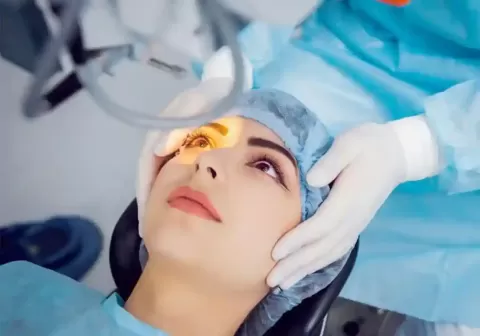
LASIK, which stands for laser-assisted in situ keratomileusis, is the most commonly performed lasik surgery used to correct vision in people with nearsightedness (myopia), hyperopia (farsightedness), and astigmatism. This lasik surgery procedure is designed to improve vision and reduce or eliminate a person's dependence on glasses or contact lenses.
LASIK is performed using a laser beneath a corneal flap (in situ) to reshape the cornea (keratomileusis), allowing light to focus properly on the retina and resulting in clearer vision. It is one of the most popular elective procedures today, largely due to the simplicity of the surgery. In most cases, laser eye surgery is pain-free and completed within 15 minutes for both eyes. Many patients notice improved vision within 24 hours, often without the need for eyeglasses or contact lenses.
Myths and Facts About LASIK
With a basic understanding of LASIK, it is important to address some common misconceptions.
Myth: Anyone who wants laser vision correction is a candidate.
Fact: Not everyone is suitable for laser vision correction. Candidates must generally be at least 18 years old and have healthy eyes with no significant pre-existing conditions. Proper screening is one of the most important steps to ensure safe and effective outcomes.
Myth: LASIK eye surgery is painful.
Fact: LASIK is widely chosen because of the ease of the procedure. Numbing eye drops are used to keep the eyes comfortable, and the surgery takes about 15 minutes for both eyes. While some pressure may be felt briefly, the laser reshaping itself is pain-free.
Myth: Recovery after laser eye surgery takes a long time.
Fact: Most patients notice an immediate improvement in vision. Vision often improves further the next day, and many people are able to return to work within 24 hours.
Myth: LASIK is a luxury I cannot afford.
Fact: LASIK can be a cost-effective long-term investment. When compared to the ongoing expenses of glasses, contact lenses, and solutions, LASIK may actually help save money over time.
Myth: Since outcomes are the same, cheaper surgery is no different from expensive surgery.
Fact: The saying ?you get what you pay for? often applies to laser vision correction. Patients should focus on the surgeon's experience, technology used, and quality of care rather than price alone. Since you only have one set of eyes, it is not an area to compromise.
The views expressed here are solely those of the author in a private capacity and do not represent the views of Centre for Sight.


Could not find what you are looking for?


